List of MicroSims for Theory of Knowledge
Interactive Micro Simulations to help students learn Theory of Knowledge fundamentals.
-
Behavior Management Decision Tree
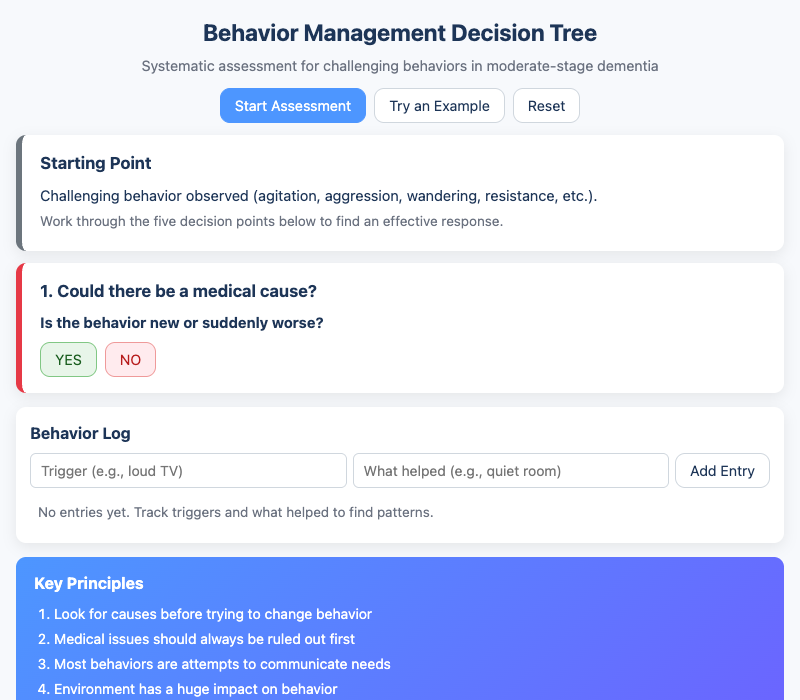
Apply systematic problem-solving to challenging behaviors in moderate-stage dementia (Bloom Level 3 - Apply)
-
Beta-Amyloid Production and Aggregation
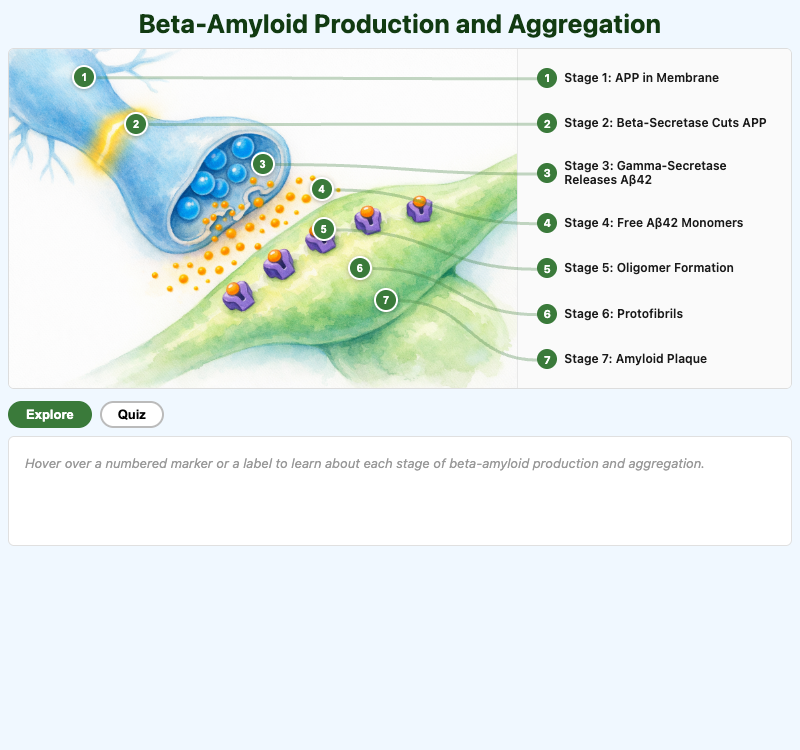
Interactive diagram tracing the seven stages of beta-amyloid production, from APP protein cleavage to mature amyloid plaques, with explanations of how each stage relates to Alzheimer's disease.
-
Brain Regions Affected in Rare Tauopathies
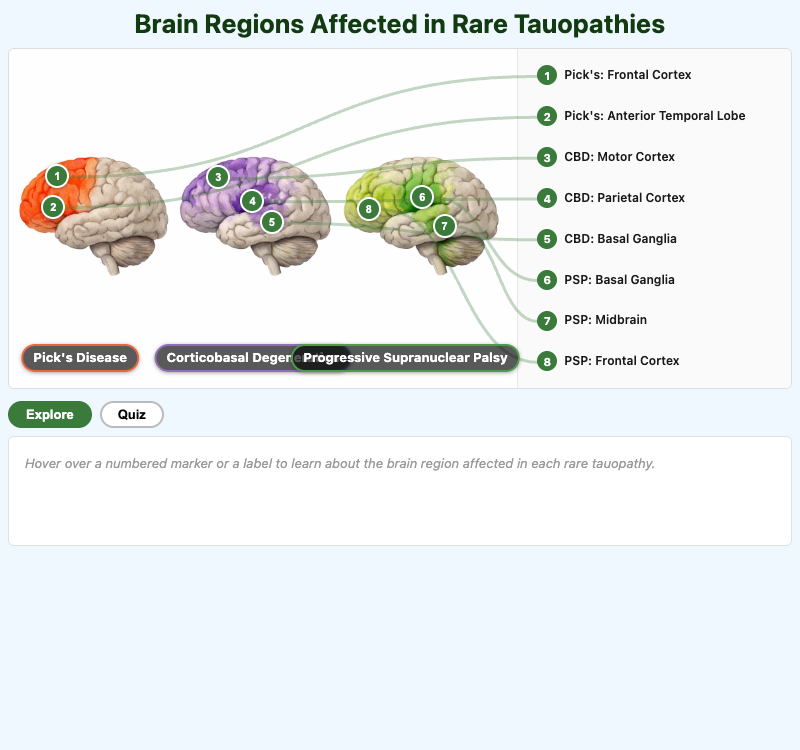
Interactive diagram comparing the distinct patterns of brain damage in Pick's disease, corticobasal degeneration, and progressive supranuclear palsy, and how each pattern produces characteristic symptoms.
-
Building Cognitive Reserve Over a Lifetime
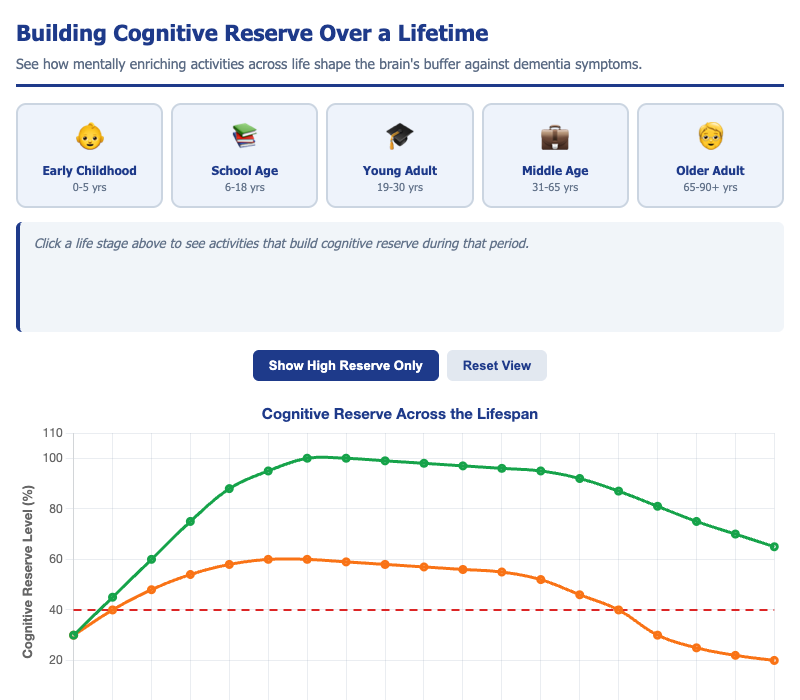
Understand how cognitive reserve accumulates through life experiences and activities (Bloom Level 2 - Understand)
-
Dementia Stages Interactive Timeline
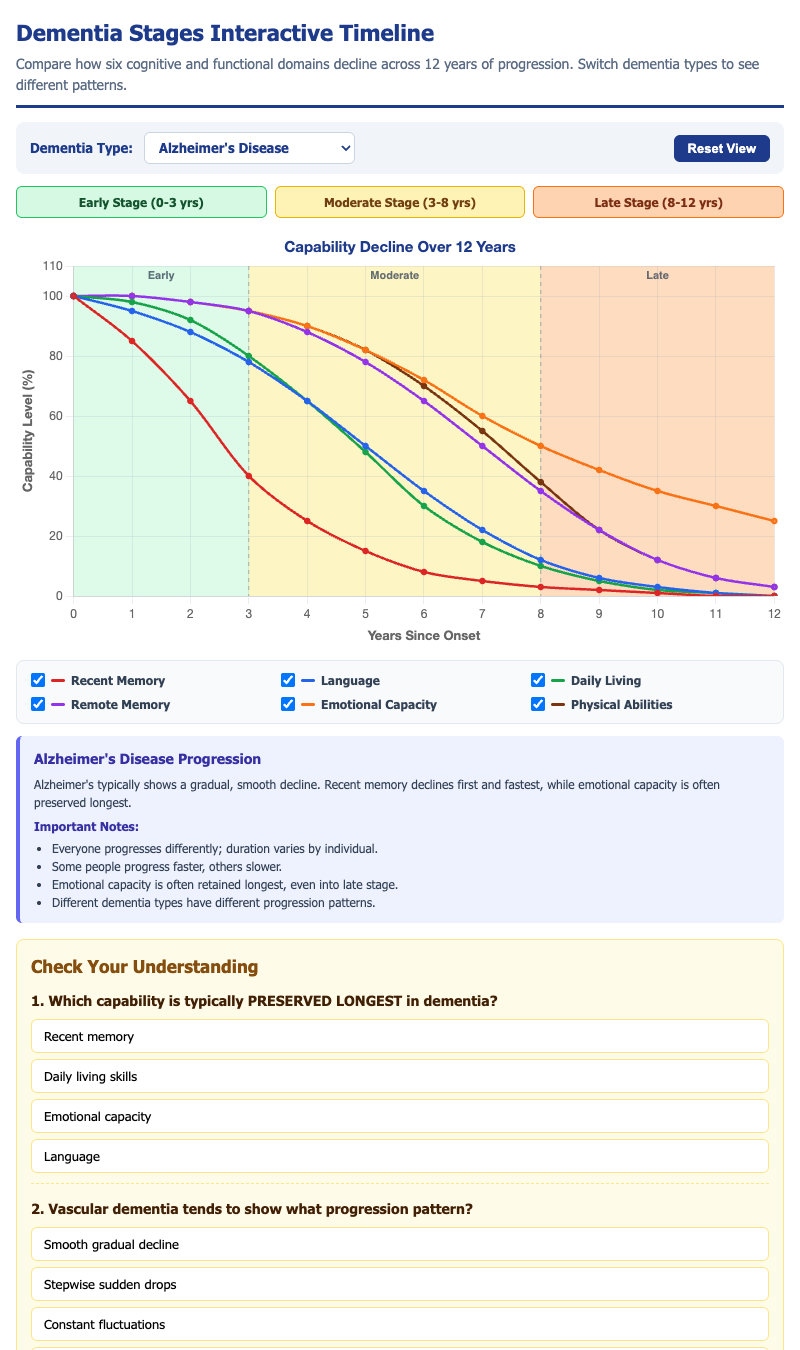
Analyze how dementia progresses through stages over time and how different domains decline at different rates (Bloom Level 4 - Analyze)
-
Dementia Types Comparison Matrix
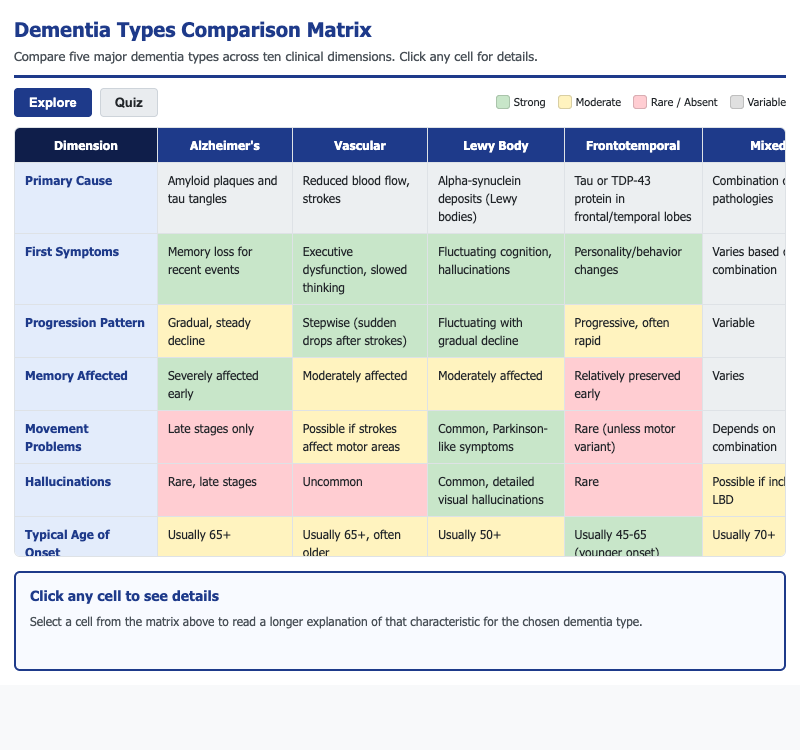
Analyze and compare the distinguishing features of major dementia types (Bloom Level 4 - Analyze)
-
Dementia Types Prevalence Chart
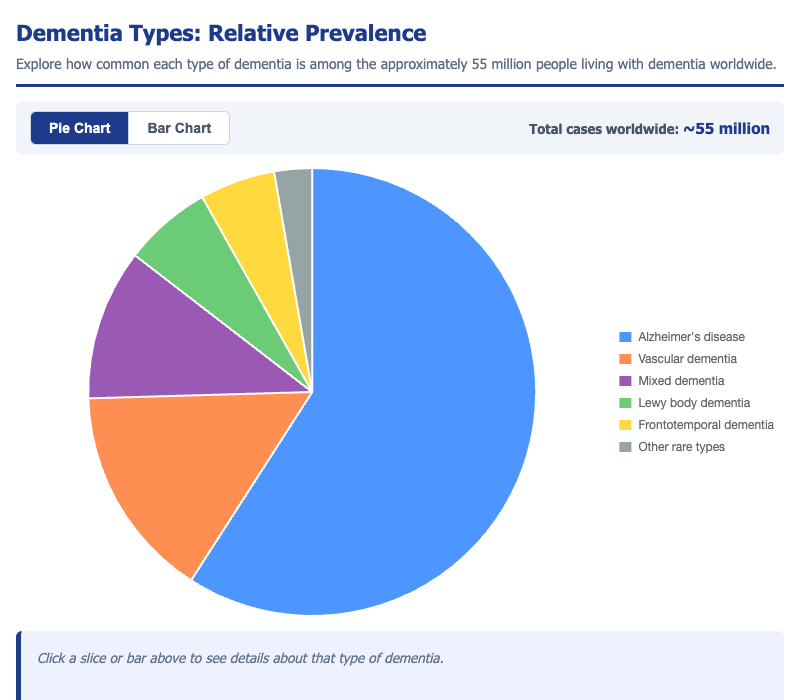
Understand the relative prevalence of different dementia types (Bloom Level 2 - Understand)
-
Early-Stage Dementia Characteristics
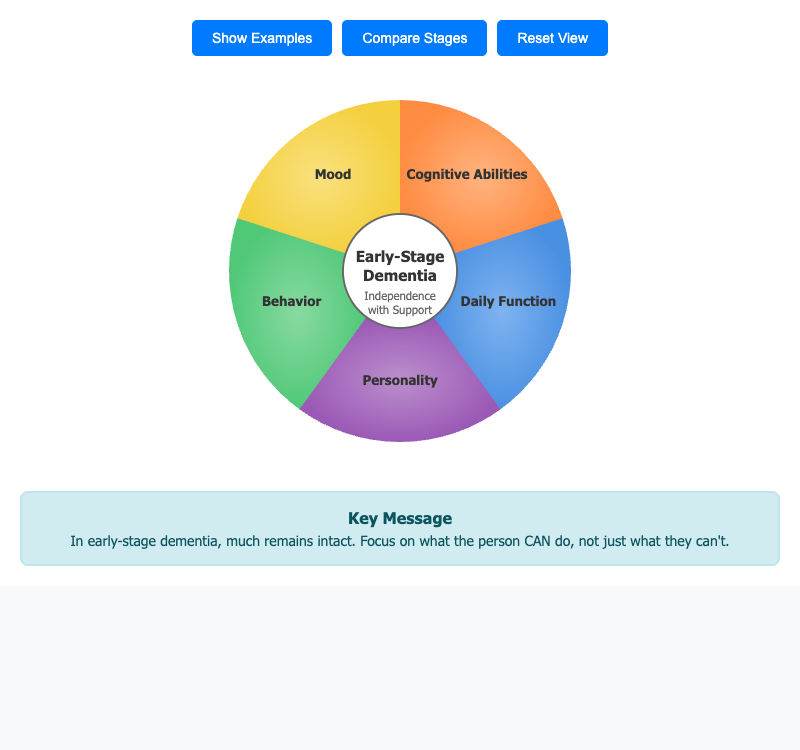
Interactive wheel diagram showing characteristics of early-stage dementia across five key domains - cognitive, functional, personality, behavioral, and mood - highlighting what is impaired versus preserved.
-
Early-Stage Dementia Characteristics
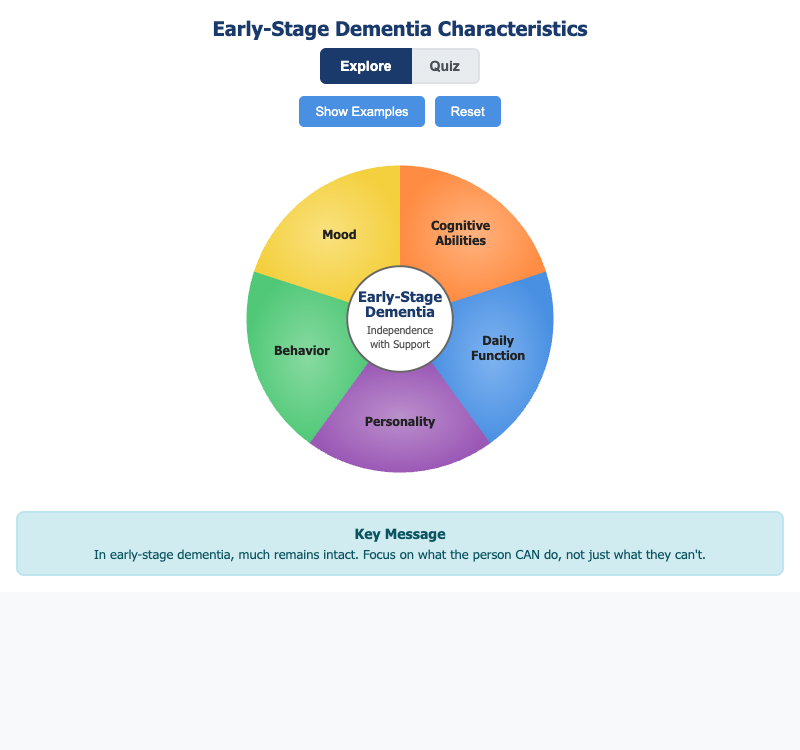
Understand the characteristics of early-stage dementia across cognitive, functional, personality, behavioral, and mood domains (Bloom Level 2 - Understand)
-
Executive Function in Daily Life
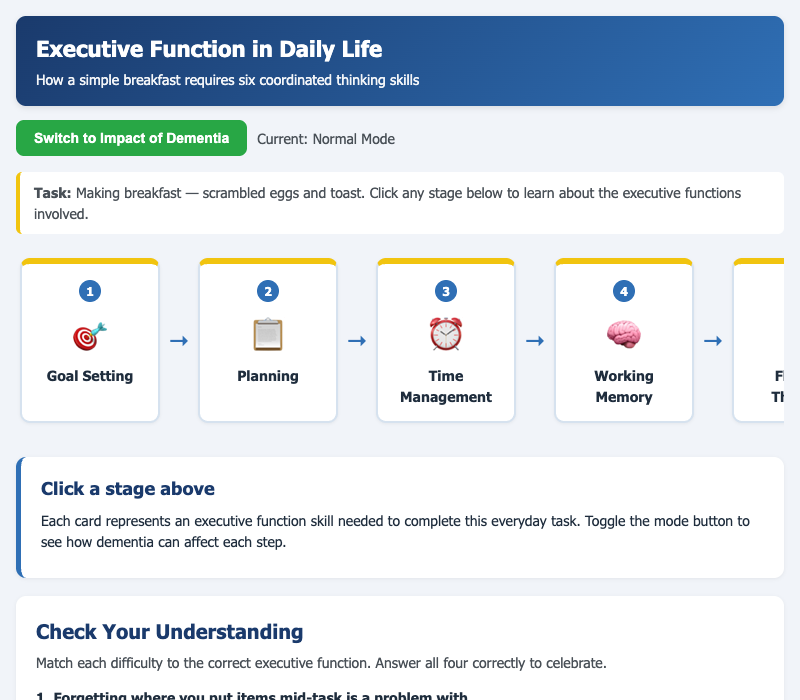
Understand how executive function coordinates multiple cognitive processes to complete everyday tasks (Bloom Level 2 - Understand)
-
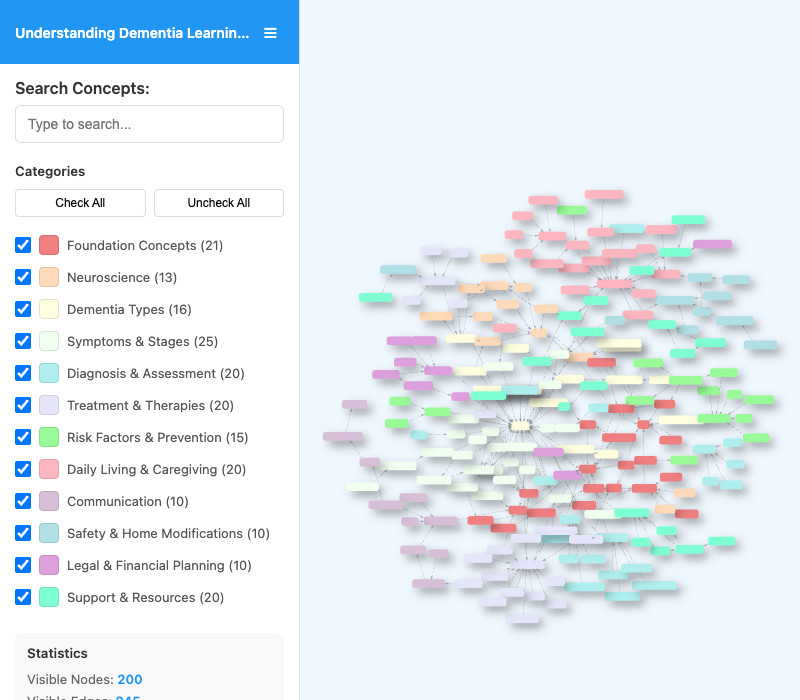
Interactive MicroSim for graph-viewer.
-
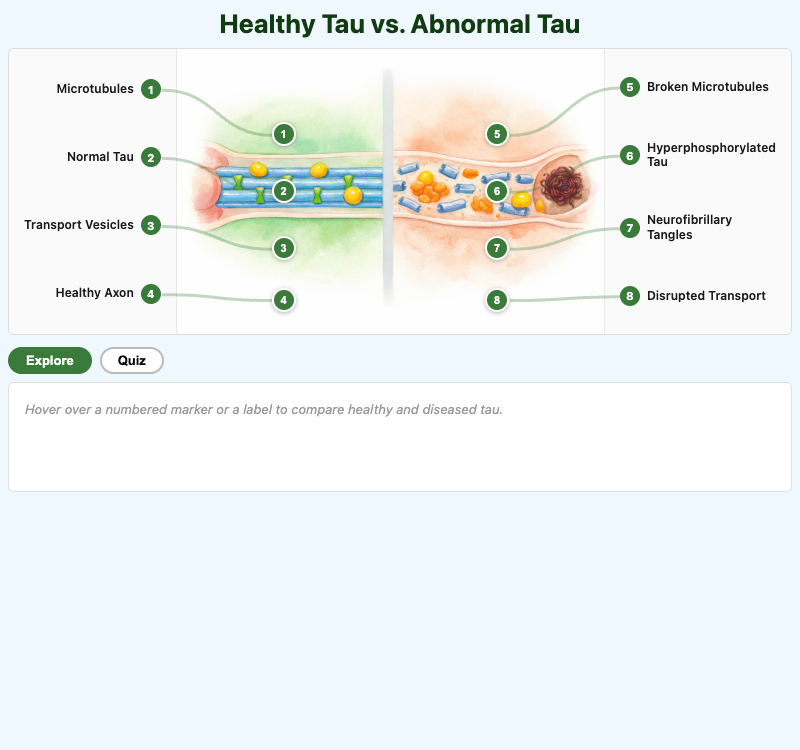
Interactive side-by-side comparison of normal tau protein stabilizing microtubules in a healthy neuron versus hyperphosphorylated tau forming neurofibrillary tangles in Alzheimer's disease.
-
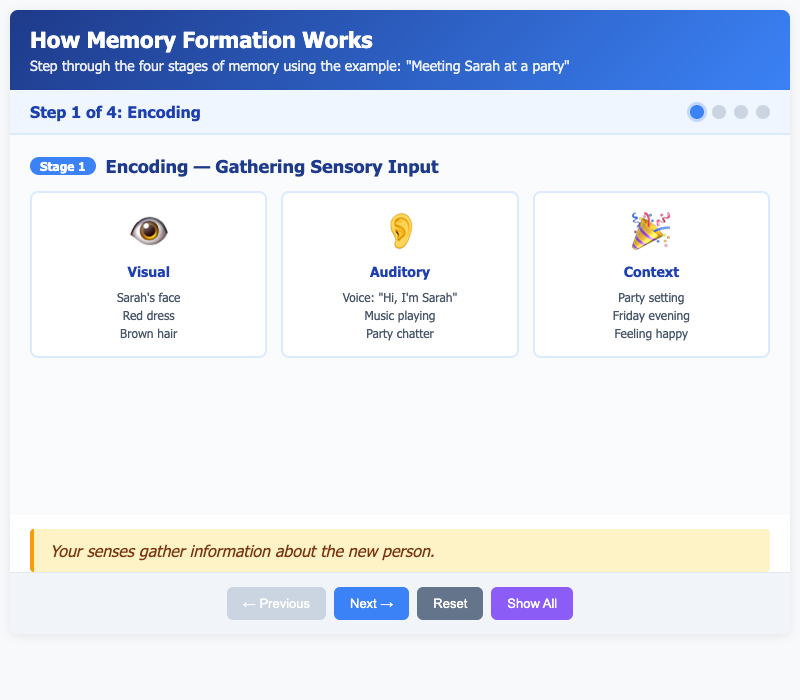
Step through the four stages of memory formation using the example of meeting Sarah at a party.
-
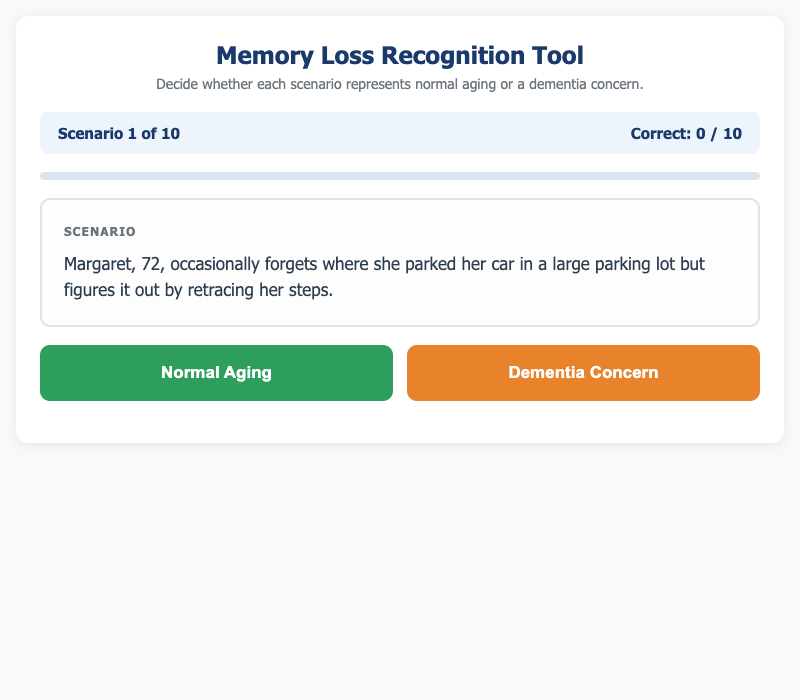
Apply knowledge to distinguish normal age-related memory changes from concerning dementia symptoms (Bloom Level 3 - Apply)
-
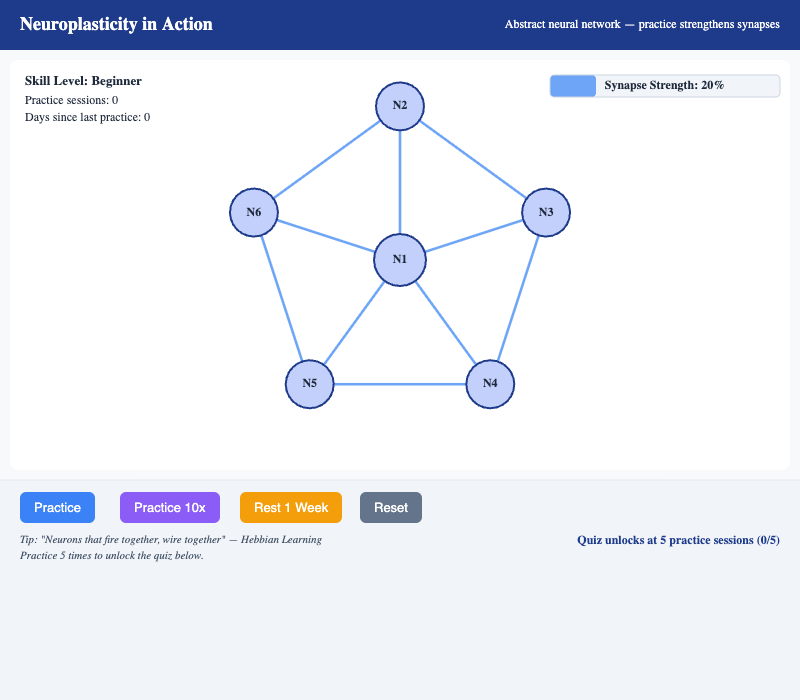
Understand how neural connections strengthen through repeated use and learning (Bloom Level 2 - Understand)
-
Normal Aging vs. MCI vs. Dementia Comparison
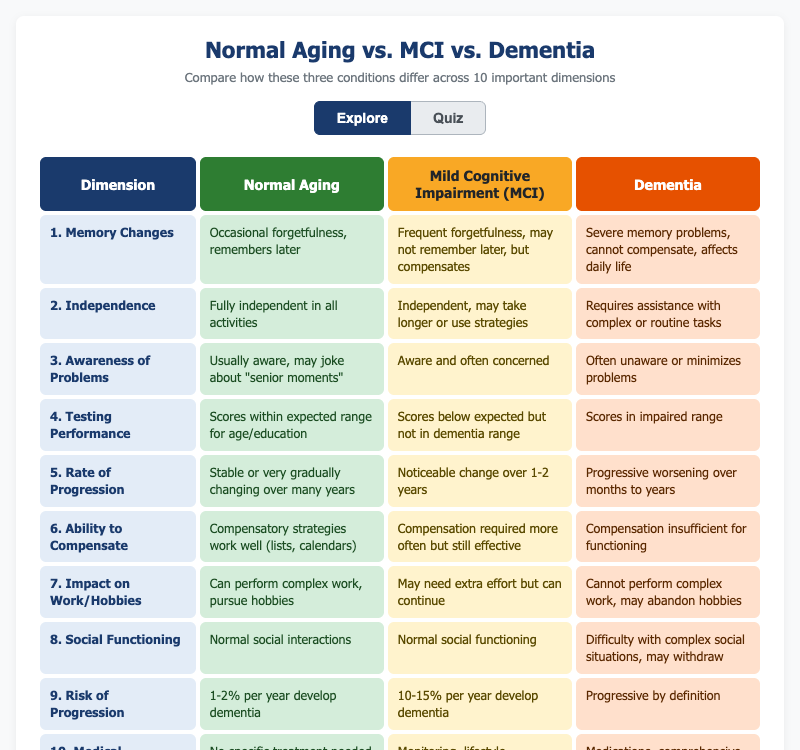
Differentiate between normal aging, mild cognitive impairment, and dementia across multiple dimensions (Bloom Level 4 - Analyze)
-
Protein Aggregation Comparison
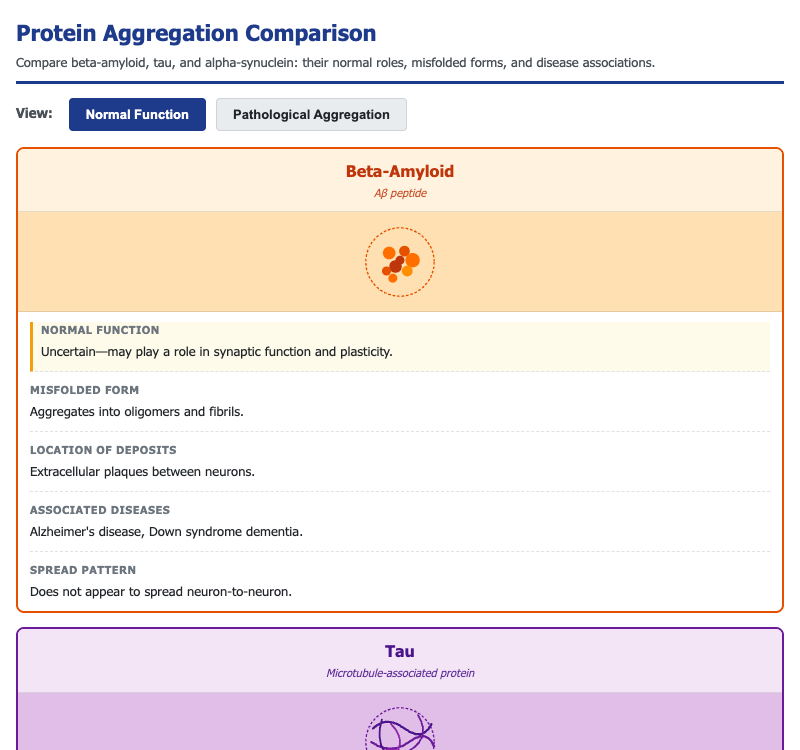
Analyze the similarities and differences between beta-amyloid, tau, and alpha-synuclein aggregation (Bloom Level 4 - Analyze)
-
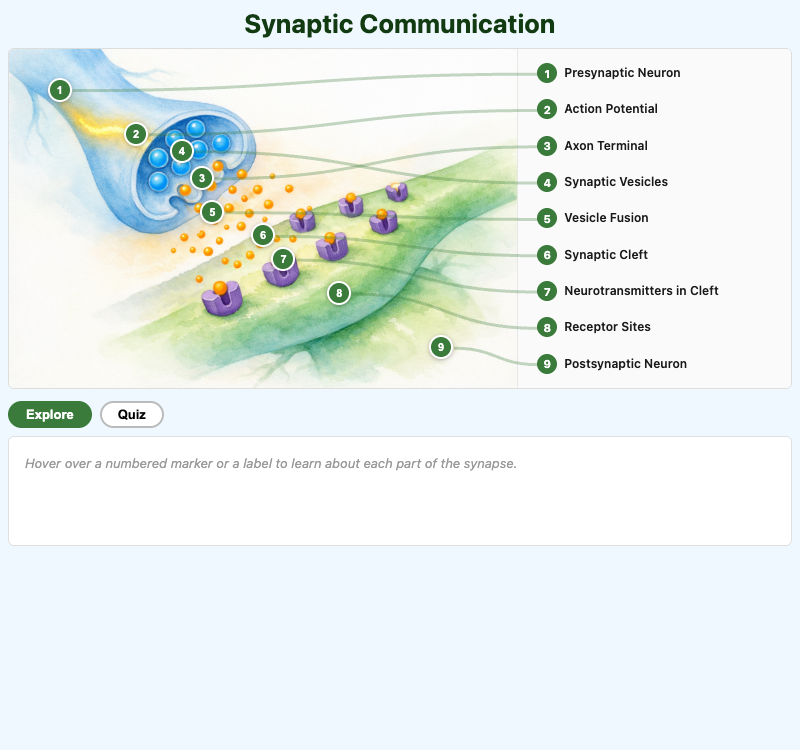
Interactive diagram showing how neurons communicate across a synapse using electrical and chemical signals, with notes on how dementia damages each step of the process.
-
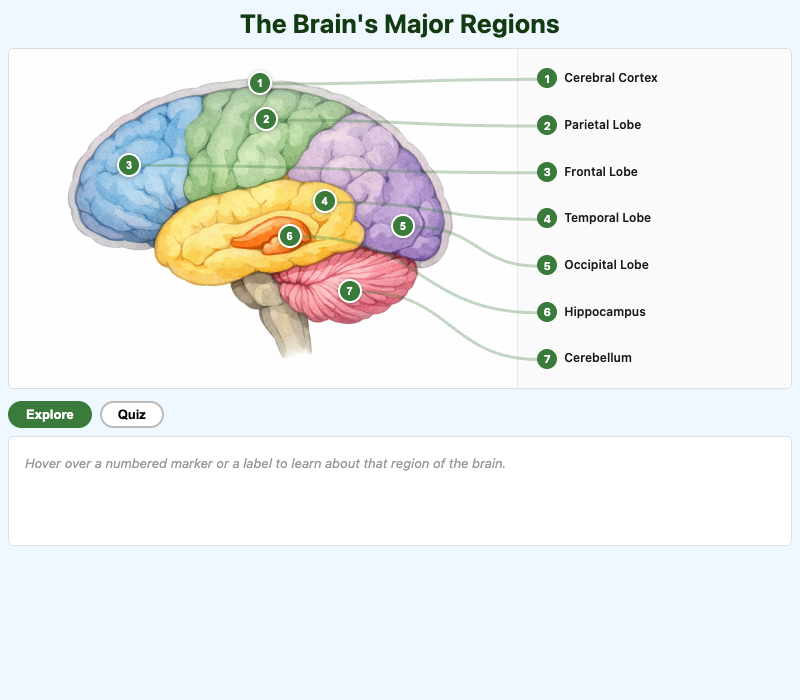
Interactive diagram to identify the major regions of the brain and their basic functions, including the cerebral cortex, four lobes, hippocampus, and cerebellum.
-
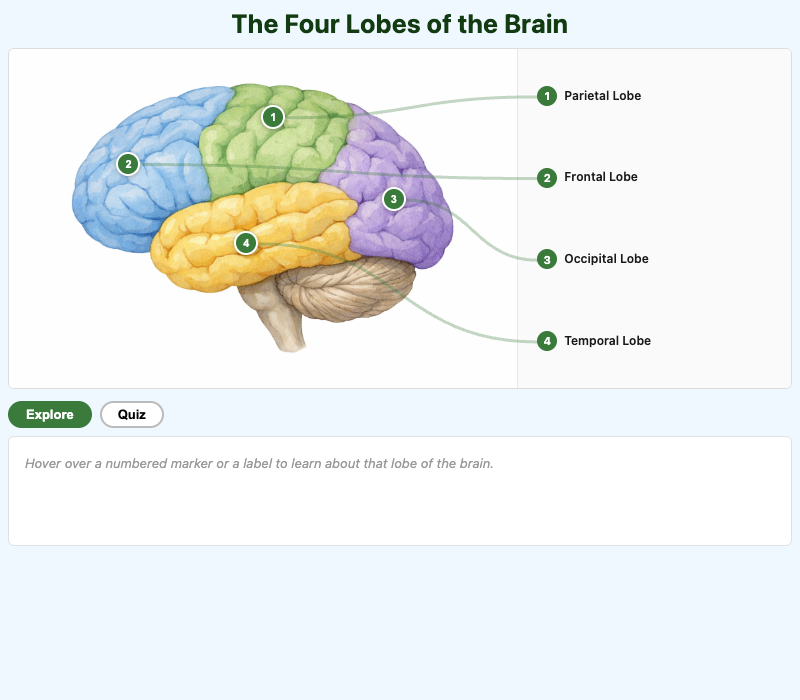
Interactive diagram to identify the four lobes of the cerebral cortex and their primary functions, with dementia impact notes for each lobe.
-
Visual-Spatial Challenges Interactive Demonstration
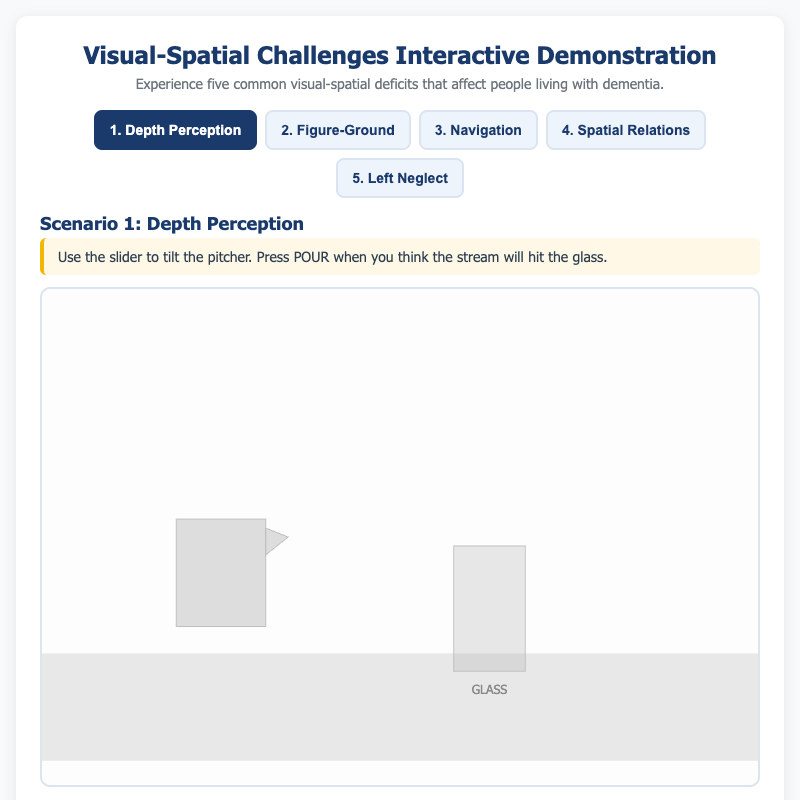
Understand how visual-spatial problems affect daily activities by experiencing simulated visual-spatial challenges (Bloom Level 2 - Understand)